Salon Corner

How to Brush Your Wig Without Causing Damage

How to Brush Your Wig Without Causing Damage

0 comments

How to Brush Your Wig Without Causing Damage

Human hair wigs are made from premium hair, but unlike natural hair growing from the scalp, every strand is secured by knots or wefts. When brushed incorrectly, stress goes directly to the construction of the wig — not just the hair itself.

At Fortune Wigs, we’ve cared for thousands of human hair wigs over the decades. The difference between a wig that lasts months and one that lasts years often comes down to one thing: how it’s brushed.

This guide walks you through exactly how to brush your human hair wig safely, gently, and effectively — the same way our salon professionals do.


First, Understand Why Human Hair Wigs Tangle

Even the highest-quality Remy human hair wigs will tangle. This is normal and unavoidable.

Common causes include:

  • Friction at the nape from clothing

  • Dry air or seasonal changes

  • Heat styling without protection

  • Improper brushing tools

  • Brushing from the roots down

The goal is not to eliminate tangles entirely, but to remove them without pulling on the knots or stretching the cap.


The Golden Rule: Always Start From the Bottom

Never brush a wig from the top down.

Correct technique:

  • Hold the hair firmly a few inches above where you’re brushing

  • Start at the very ends

  • Work upward slowly in small sections

This prevents tension from traveling directly to the knots and dramatically reduces shedding.


Choosing the Right Brush (This Matters More Than Anything Else)

The brush you use determines the amount of damage during detangling.

A proper wig brush should:

  • Have smooth, rounded metal pins

  • Contain no plastic ball tips

  • Glide through hair without snagging

  • Reduce static instead of creating it

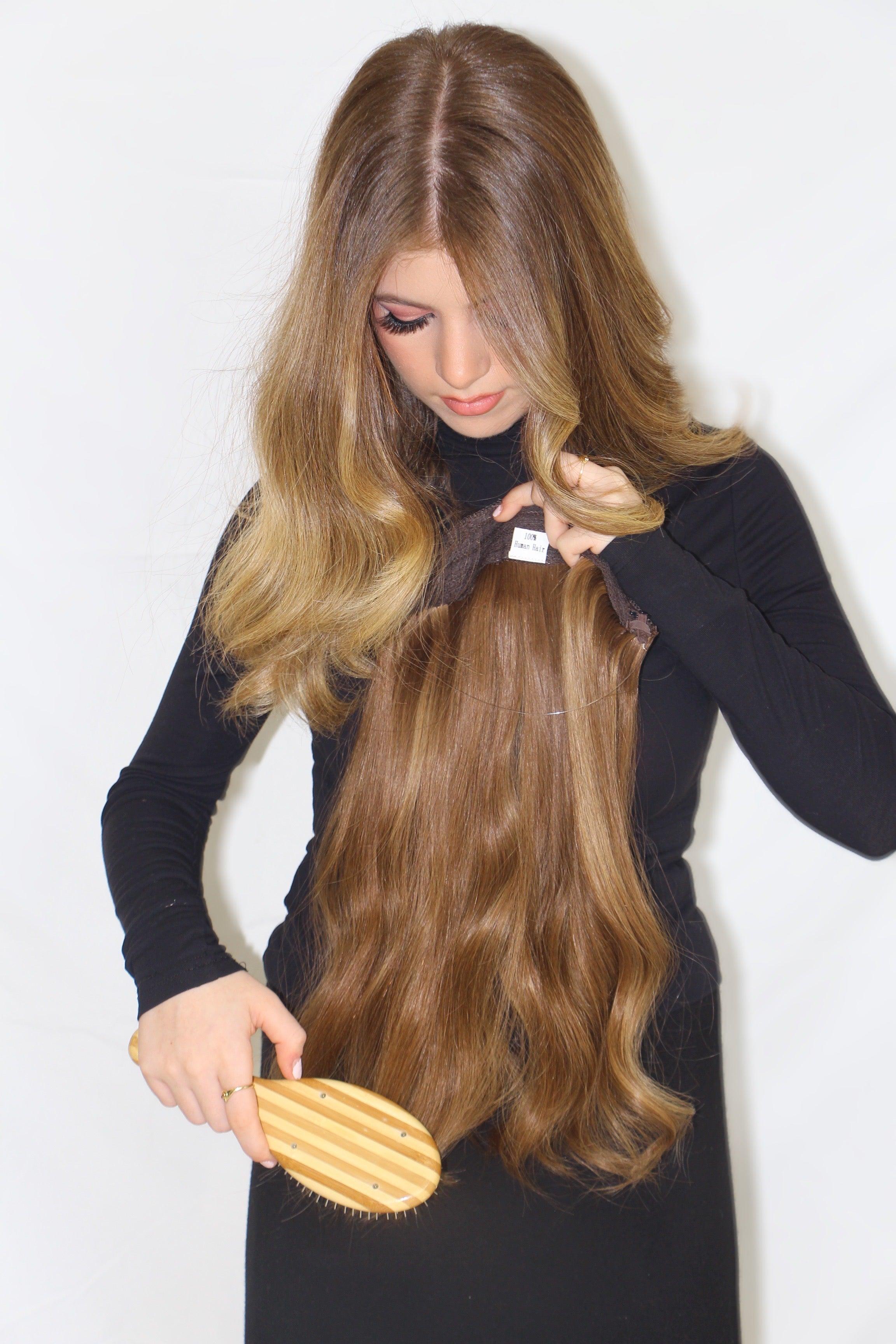
Our bamboo detangling brush is designed for this exact purpose. It features smooth metal pins with no ball tips, allowing the brush to glide through hair without snagging or pulling. The metal pins mimic a hackle, the steel-pin tool used in wig factories to blend hair before it is tied into the cap. This helps release knots gently instead of tearing them apart.

The Fortune Detangling Brush

For travel or touch-ups, a compact brush prevents knots from tightening throughout the day.

The Fortune Mini Detangling Brush


How to Brush Your Wig, Step by Step

Step 1: Choose Your Brushing Station

Use a wig stand or mannequin head whenever possible. This keeps the wig secure and allows the hair to fall naturally. You may also brush the wig while wearing it, as long as you are in front of a mirror and can clearly see what you are doing.

Step 2: Assess the Tangling

Before brushing, take a moment to look at the wig. If tangling is minimal, you can begin brushing right away. If the wig looks dry or heavily tangled, apply a light leave-in conditioner or detangling spray formulated for human hair wigs to soften the hair.

Step 3: Brush Gently in Sections

Begin at the ends and work your way up slowly. Use short, gentle strokes. If you feel resistance, stop and loosen the knot with your fingers before continuing.

Step 4: Be Careful With Lace Front and Lace Top Wigs

When brushing a lace front or lace top wig, be especially gentle. Lace is delicate, and excessive handling can cause fraying or damage. Avoid repeated brushing directly over the lace or part, and always support the cap while brushing.


When to Brush Your Wig

  • Always brush before washing

  • Lightly brush after wearing

  • Brush before storing

Never brush a wig when it is soaking wet. Hair is weakest when wet and more prone to stretching and breakage.


Final Thoughts

Proper brushing protects both your hair and your wig's construction. With the right brush and a gentle routine, daily maintenance becomes easier, and your wig stays smoother, fuller, and wearable for longer.

If you ever have questions about caring for your specific wig, our stylists are always happy to help.

Back to blog

Leave a comment

Please note, comments need to be approved before they are published.